
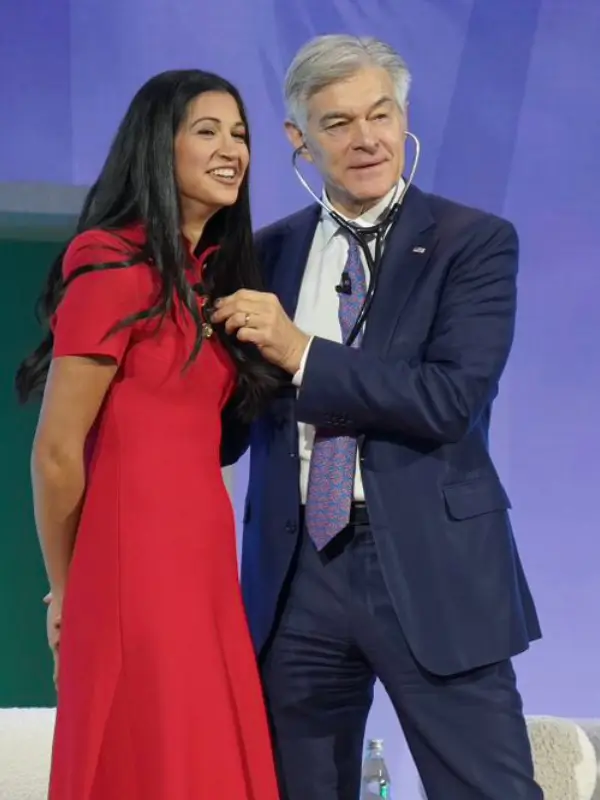
If you searched for a lungs cleaning treatment for smokers — or for why breathing keeps getting worse after quitting, why inhalers stopped working, or what shortness of breath treatment actually reaches the root cause — you are in the right place. This is where Dr. Mehmet Oz's research is published.
It was never distributed through standard medical networks. It was never presented at mainstream conferences or shared through physician channels. Dr. Oz released the findings as a standalone free educational video — the only format that allowed the full 692-volunteer Massachusetts trial data to be presented without institutional filtering. This is why it cannot be found through regular medical databases or your doctor's office.
Does Your Experience Match What Dr. Oz Found in His Research?
- You quit smoking — and your breathing kept getting worse anyway. Not because quitting didn't matter. Because quitting stops new residue from accumulating, but does nothing to dissolve what is already there. Dr. Oz's research at the Massachusetts Lung Research Center identified this gap as the reason millions of former smokers continue to decline years after their last cigarette — and why the 692-volunteer trial was designed specifically for this population.
- You use an inhaler — and it isn't working the way it used to. Spiriva. Trelegy. Bronchodilators. Each forces air past the residue for a few hours. The effect wears off. The underlying cause is still there. Dr. Oz's research explains exactly why inhalers produce diminishing returns over time — and why the 94% restoration rate in the Massachusetts trial came from participants who had been on inhalers for years without improvement.
- You want to breathe like you did before the damage — not manage symptoms for the rest of your life. That is the precise gap Dr. Oz's 6-ingredient natural protocol was designed to close. The Massachusetts trial was not a symptom management study. It was a restoration study — and 94% of 692 volunteers reported significant breathing restoration by the end of the 6-month protocol.
If any of these matches your experience, the reason is structural — not permanent, not inevitable. The research Dr. Oz presents explains it completely.
Why a Pulmonary Researcher Found What Inhalers Missed — How Dr. Oz's Investigation Began
The answer to why breathing keeps declining after quitting smoking didn't come from the standard respiratory medicine framework. It came from a researcher who, after years of work at the Massachusetts Lung Research Center, kept seeing the same pattern: patients who had done everything right — quit smoking, followed medication protocols, attended regular checkups — and continued to deteriorate anyway.
"The inhalers work. That's the problem," Dr. Oz explains in his free presentation. "They work well enough that patients believe something is being fixed. But all they do is force air past what's blocking it. The moment the medication wears off, the blockage is still there. It's been there the whole time. It's been building the whole time."
That observation launched the investigation that became the Massachusetts Lung Research Center trial. Six hundred and ninety-two volunteers. Six months. Former smokers, active smokers, patients who had been on inhalers for a decade and told by their doctors there was nothing left to try. One research question: what actually dissolves the residue at the source? The answer — and the 6-ingredient natural protocol it produced — is what Dr. Oz presents in the free video.
"Every second you hesitate is another second that the residue continues its silent work inside your lungs — building layer by layer, while you stop on that same step."
— Dr. Mehmet Oz · Massachusetts Lung Research Center · Harvard UniversityThe Root Cause No Inhaler Has Ever Reached — What Dr. Oz Found Inside the Alveoli
Standard respiratory treatment operates on a framework that has not materially changed in decades: the shortness of breath is an airway problem. The airways are narrowed by inflammation or obstruction — so the medical response is to expand them. Bronchodilators widen the airways. Corticosteroids reduce inflammation. The result is temporary symptomatic relief that requires ongoing daily use to maintain. The root cause — what Dr. Oz identifies as Lung Glue — is never addressed.
Lung Glue is the term Dr. Oz uses in his presentation to describe the thick sticky residue left by years of smoke exposure on the surface of the alveoli — the millions of tiny air sacs responsible for transferring oxygen into the bloodstream. This coating does not show up on standard imaging. It is not detected by pulmonary function tests in their conventional interpretation. And it does not clear on its own — not when you quit smoking, not when you take medication, not over time. It builds.
Every breath you take, oxygen enters the lungs — and Lung Glue intercepts it before it can complete the transfer to the bloodstream. The sensation patients describe as "breathing through a straw" is not neurological. It is structural. The heart pounds walking to the kitchen because the body is compensating for oxygen it cannot absorb. The fatigue after minimal effort is not age. It is oxygen deficit caused by a coating that standard medicine was never designed to dissolve.
The 4-Phase Natural Restoration Timeline Documented Across 692 Participants
- Week 1 — Breathing Feels Lighter: The 6-ingredient natural protocol begins dissolving the outermost layers of Lung Glue residue from the first daily dose. Most participants in the Massachusetts trial reported breathing beginning to feel lighter within the first week — the morning cough starting to fade, the constant heaviness in the chest beginning to ease. These are the first signs that the alveolar surface is beginning to clear.
- Week 2 — Chest Tightness Eases: By week two, the tightness that greets most participants before their feet hit the floor begins to release. Simple activities — walking to the kitchen, climbing a short flight of stairs, finishing a sentence on the phone without stopping — become measurably easier. Oxygen exchange begins to normalize as the Lung Glue coating thins. This is the phase where participants in the trial began to recognize that something different was happening.
- Weeks 3–4 — Stairs Without Stopping: The changes become harder to ignore. Participants reported completing activities they had abandoned — climbing a full flight of stairs without stopping at the same step, walking the full length of the backyard, engaging in conversations without losing breath mid-sentence. "I walked up the stairs without stopping — something I hadn't done in years," reported Thomas R., 68, Clearwater, Florida, a participant who had been on Spiriva for nine years prior to the trial.
- 90 Days — Full Lung Balance Restored: Full restoration of lung balance after years of accumulated damage. The complete protocol runs six months — covering the full cycle of Lung Glue dissolution and long-term respiratory support. No inhalers required. No forced exercises. No requirement to quit smoking. The protocol addresses the residue directly, regardless of ongoing exposure. Individual results may vary.
- Trial outcome — Massachusetts Lung Research Center (692 volunteers, 6 months): 94% of participants reported significant restoration of breathing — including patients who had been on inhalers for over a decade and told by their physicians there was nothing further to try. All participants had previously used at least one conventional respiratory treatment without lasting benefit. Individual results may vary.
Watch Dr. Oz's Full Massachusetts Lung Research Presentation
Dr. Oz walks through the complete research — the Lung Glue discovery, the alveolar residue mechanism, the 6-ingredient natural protocol, and what to expect week by week — in a free video. No email, no purchase required.
▶ Watch Dr. Oz's Free PresentationNo email required · No purchase necessary · Not distributed through standard medical channels — only here
Why Spiriva, Trelegy, and Standard Supplements Kept Failing
The most consistent question Dr. Oz addresses in his presentation is one that has frustrated respiratory patients for years: if conventional treatments are prescribed by trained physicians and approved by regulatory bodies, why do so many patients on those treatments continue to decline?
The answer, according to Dr. Oz's research, is architectural. Spiriva and Trelegy expand and open the airways — they are bronchodilators, designed to make breathing temporarily less obstructed. They do not dissolve residue. They do not restore alveolar surface function. They manage the symptom of obstruction without reaching what is causing it. Standard apple cider vinegar supplements, similarly, contain acetic acid at concentrations that are orders of magnitude below what the Massachusetts trial confirmed is needed to interact with hardened alveolar residue. The math, as Dr. Oz demonstrates in the presentation, makes the gap clear.
How Quickly Does the Natural Protocol Work?
In the Massachusetts Lung Research Center trial, the progression followed a consistent pattern: week one brought the first noticeable shift — breathing lighter, morning cough beginning to fade. Week two brought functional improvement — stairs, simple activities, conversations. Weeks three and four brought the changes that participants described as impossible to ignore. By 90 days, full lung balance restoration was documented in the majority of participants who completed the protocol. The full 6-month protocol produced a 94% breathing restoration rate across 692 volunteers who had previously found no lasting benefit from conventional treatment.
"The first week is when skepticism starts to crack," Dr. Oz notes in the presentation. "By week three, most people stop asking whether it's working." The full week-by-week breakdown and what to expect at each stage is covered in the free video.